Thursday, June 30, 2011

Being Boring

I have a confession to make:  I am boring.  It's not something I like about myself, but it is something I've noticed from time to time while cutting my toenails or watching a movie or even when I'm talking about something that I've clearly overstated or haven't completely understood. This isn't to say I'm no fun, or even useless, but I can no longer say that I am a truly fascinating person.  That's okay, though.  Neither are you.

Teddy Roosevelt--now that was an fascinating guy.  Killed animals for fun, went with his son Kermit and explored the Amazon Basin, became president, fought in a couple wars, got shot and yet still continued his speech--this is the kind of guy that people watch with their mouths hanging open and write books about and argue about and try to find out what made him tick.  He's a fascinating guy.  Other fascinating guys include (but are not limited to) Hemingway, Lincoln, Gandhi, Alexander the Great, Cleopatra, Da Vinci, you know, all the people that get posted on elementary school bulletin boards.

There is a difference in fascinating people, though, and people who do interesting or fascinating things.  Frank Zappa is an interesting guy, and I think that some of his ideas were great, and he was an awe-inspiring musician, but I can't really put him up there with Lincoln--maybe you can, I don't know, but I don't think that he's so good that you'll see his name in elementary school textbooks.  Another interesting guy is Julian Assange--I don't necessarily want to read a biography of him, nor would I really like to know everything about the guy, but I do find him interesting in the work that he does, why he does it, and his ideals concerning privacy and transparency.

My dog used to make this same noble face when he was watching me eat tomatoes.

But I was just really looking at myself and I find that it's very possible no one will ever write a book about me, no one will ever want to sit me down and interview me on my ideas of the world, no one will probably ever really be interested in everything I say.  I'm not going to have fans like George Lucas or have my biography eagerly anticipated like Mark Twain.  I'm just not that special.

Here's the rub, though--it's okay.  Who fucking cares? there's really no point to trying to be any of those people, and they would be the first to tell you that.  They became famous and interesting all on their own by just doing the things that came naturally to them--Teddy Roosevelt was an adrenaline junkie and couldn't sit still if he wanted to.  He had to be off being the champion of...whatever.  Julian Assange leaked files because he knew in his heart that was the right thing to do, even if others thought it was wrong and others still thought it amounted to treason (PS I have a definite opinion on this guy, but I have no desire for politics).  These guys didn't do things because people were watching them or because people might be watching them--they did them because it made sense.  To them.

Yes.


So now I'm trying to write a book--I don't know if people will like it, I don't know if anyone will even buy it or read it.  But to me, it's an important work, and may be the first thing that I've ever written that takes me to a different place as a writer--this isn't just a story, this is something I'm writing to figure myself out--I think that this book may change me fundamentally, and that can't be a bad thing.  But there are moments when I doubt myself, when the animals in the back scream out "shut up, you're boring and no one cares what you say" and that may be kind of true--but this time it doesn't matter.  I'm writing for me and I'm going to finish the fucker, hell or high water.  And maybe that isn't that boring at all.

Stumble Upon Toolbar

Thursday, June 2, 2011

Twitter is Stupid

Okay, fellow humans, let's start off by stating this knowledgeable fact: twitter is stupid.  All twitter really does is allow fans to remain in pseudo-contact with their beloved celebrities. When Kelso from That 70's Show is eating calamari in Venice, you'll know about it; if Stephen Tyler is gawking at thirteen-year-olds at his local mall, you'll be the first informed.  But really, the trouble with Twitter is that it's a lot of bullshit no one really looks at or cares about.  Full discolsure, I have a twitter, too, but lacking anything clever to say most hours of the day, I don't use it terribly often.  Mostly the reason for my only having like 12 tweets is that I don't really need to tell people that I'm eating a snowcone on a street corner that smells like garbage or that I've finally beaten Super Smash Brothers 64 on the Very Hard setting--it's just not pertinent information to anyone (hell, not even me half the time).  So why the hell would anyone follow me on twitter?  Good question, but for a better answer, it's because I want them to and of course because I think they might actually care.


The biggest problem with the Twitter mentality is that people use it to validate the bullshit they do on a daily basis.  People want to feel good about their lives and want to feel that whatever they're doing is inherently right or good, or whatever, or they want to point out something that someone else does and call it stupid or whatever*.  Think about it, why else would you tweet that you and your girlfriends are splitting two pepper steaks at P. F. Chang's if you didn't want either someone to ask about it or someone to be jealous?  What's so special about you buying flip-flops at Hollister (other than you just paid $45 for something I can buy for $1.99 anywhere else)?  Unless you have something clever to say or have figured out a way to cure cancer by tweeting about it, then it's pretty much useless.  Oh, and for those who like to pretend it's a news source because of the tweet about the Miracle on the Hudson, that is the exception to the rule.  Twitter has a million people using it--congratulations you found the one meaningful post.  Well done--I have a needle lost in this haystack over here, I need your help finding it.

I think the strangest thing about Twitter is that it's basically set up like texting--and yet most of the people I've met who have a twitter have no idea how to send a text.  Twitter, at it's best, is a conformity tool that forces you to pick the best way to say something in 140 characters.  Not that very many people do this (Conan** does, but c'mon, of course he does), but really, at it's best Twitter could help people develop the English language in a short, concise way.  Instead two things happen: people abbreviate words into indecipherable goobledegook consisting of capital letters and superfluous punctuation ("OMG! FB nt wkng WTF YO?!?!?!?!?!?!?!?!) or three hour texting sessions after Kevin Smith got kicked off an airplane because he was "too fat to fly"***.

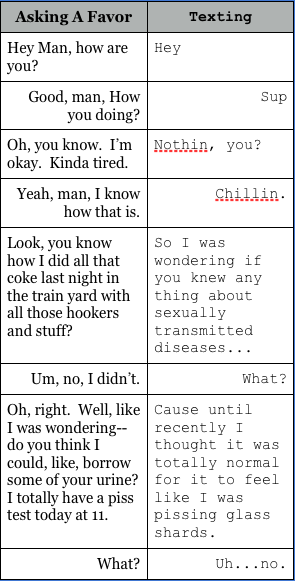
Really what should have happened was people learning to not ramble along like assholes with all the time in the world*.  The direct opposite of this is the texts I get from social-media types that start off with "hey."  "What's up?" and end with "k", "cool", and "bye".  Do these people realize that texting costs money?  Do they realize that every time you send a text it should have as much information as possible in it, that way it only takes three texts and 45 cents as opposed to the costomary cycle of bullshit you go through when you ask a favor:

These types of conversations happen all the time.

Not to mention that it costs less money and time to just dial the number and call the person than spend 45 minutes typing to your girlfriend about where to eat when you could just as easily argue about it over the phone or even better yet, let the subject go for a little while.  Why are you worrying about it now?  Couldn't you just wait until later when you're both in the same room instead of dragging it out and making it worse for everybody?  At least in person you can know if your suggestion to go to Burger King is going to get you in trouble or not.

*This is the part of the article where I become a hypocrite.
**This is one of several Conan tweets: Team Coco
***I love Kevin Smith but I think that he should probably have taken this as a warning to exercise a little instead of a "hey, they're pickin' on the fat kid" whine-scape.  Looks like ol' Kevin has really lost the Jersey in him.

Stumble Upon Toolbar

Thursday, April 28, 2011

"Tis the Season

Ahh yes, the bright sunny season of Summer has sauntered it's salacious self into our schedules. No more are the whining masses bitching about the cold and the wind and the freezing rain, the snow and sleet, wearing too many clothes just to be cold AND uncomfortable. It's funny, really, how all winter long everyone bitches and complains about winter and the cold (I too am of this camp) and then stays inside on their computers when it's finally nice enough to go for a walk in just a shirt and pantaloons.
Unfortunately, there are responsibilities that come with Summer/Spring/Late Spring that cannot be avoided: namely, school is over and I'm out of money.
This is a bummer for me namely because I enjoy school, such as it is, and have tons of free time to do things like write in my blog (which I forget to do), write stories (which I do in short bursts separated by long washes of nothingness), and do all the other bullshit associated with trying to make it in this crazy-mixed up world (that part means literally nothing). In other words, I was free to laze about and do what I wanted, which for the most part was procrastinate.
Now, however, is crunch time. It's final/study time here in Weskerland and so the next week or so (well, two weeks) are going to be kind of filled with hateful studying and paper-writing. I say hateful only because papers are no fun. Literally. That suck the joy from a person like the vacuum of space (I don't think that made sense). I also need a job, I need income, I need to pay my phone bill, my rent, my utilities and I need it pronto.
What all this means is that until I get a job, the story-publishing thing is going to have to take a backseat. I have two stories I need to edit for the future, but for now I'm doing that after I get all my daily bullshit done (namely, searching for jobs, writing papers and studying). I still want to work on them, but for now they're not a priority.

I do have half-hopes that by the time the middle of May rolls around I'll have another story up on Amazon and I'll be well on my way through the third story and maybe even starting to figure out the coding process for the collection I wanted to put together (it'll probably be $9.99 for the book, so I can maybe pay a bill if five people buy it). There are a number of other hurdles with promotion that I have yet to even really examine--simply because I've been bogged down with this job search thing.

So, to make it short and simple: Though I wanted to publish another story this week, I can't because I have been doing other, more important stuff and this trend will most likely continue until the middle of May. I'll still try to publish a few things on here (at least one a week) as I do have a couple of things rattling around in my head article-wise, but the real stuff (my art if you want to be pretentious about it) my not be visible for a bit while I get my shit together.

So, if you're looking to talk to me, I still have the same old E-mail, the same old Facebook, the same old Twitter, all that bullshit. If you haven't bought my story and would like to, it's on Amazon. If you'd like to help out this blog you can click some of the Ads that are all over it (I want to set up a Donate/Paypal thing but again, this takes time). If you have a job opportunity, by all means let me in on it, and finally if you have just won the lottery and want to send me the winning ticket e-mail me so I can send you my new address.

Stumble Upon Toolbar

Tuesday, April 12, 2011

Shelter Books

I am a re-reader. I’m not ashamed to admit it, I’ve come to accept that I’m the kind of person who digs a little bit of the same-old, same-old sometimes. Though I can’t say I re-read everything (as there are definitely books and essays I’ve read that were terrible the first time) I do consider myself a person who re-reads.
There are also some books that I’ve read that were so great, but so HUGE that I could never re-read them simply because the first time was such an undertaking. The Stand for example: that book is so long that it actually exhausts me after the first act (what I like to think of as the “Everybody dies” Act). It’s hugeness is daunted only by Infinite Jest by David Foster Wallace--Which I have been reading in a picking-it-up-putting-it-down way for the last two years. That book (Infinite Jest) is a mind crusher (it’s 1079 pages, with endnotes).


There are other books that I don’t/can’t/won’t reread simply because they were so heavy in subject. I may re-read them again someday, but not soon--it’s too much for my blood. For example: Middlesex, by Jeffrey Eugenides (read in 2008) was an amazing book that pretty much retaught me what a book could do and what a book could be if enough effort, time, and talent were put behind it. It’s not the longest book, but holy shit does it cast a numerous bunch of characters that change, evolve, bulb off and spread anew into an ever-changing landscape of America. That’s a lot of words to say that Middlesex sorta-kinda rocked my face off, and though I’d love to go through it again, it wouldn’t do me any good to re-read it once a year--it just wouldn’t be the same. Same with For Whom the Bell Tolls--that book is crazy-good, but once. At least for now.
However, all this said, I do re-read books. Usually when I mention this to my friends they are in one or two camps: they don’t read that much (if at all), so they’ve only read the same one book twice or the same three books over and over again for however long they’ve owned them. I find that to be boring--why reread the same three books and never experience new books? But the other camp--all they do is read NEW books--like all they crave is new information, and never see the point in looking back on something to see what the hell it was that made it so interesting.
So the thing is this: I consider those books I’ve re-read a bunch of times (like over 4) “Shelter books,” i.e. books that I read when the storms are rough and I forgot what it was that made me who I am as a reader--what I like, what I hate, what defines my beliefs as a human--these books are the ones I’ve re-read for years. So these are them--some classics, some not-so-classics, most you’ve heard of (hopefully), and heavy Stephen King (it was the only dude I read for the first ten years of my reading-life), but at least they do something for me I can’t quite exactly put a finger on anymore except they make me feel at home.
(PS: These books are listed as they a)popped up in my brain and b) how many times I’ve read them)

I Lord of the Flies By William Golding

This is the best book ever written. Easily. Sure, I didn’t read Atlas Shrugged or whatever that other book is with the people or whatever--this book is truly the bees knees. If you don’t know the plot (bunch of boys stranded on an island trying, at first, not to kill each other), then don’t read the sentence I just typed, as it may contain spoilers. The subtle parts, the explicit parts, the anger, the sorrow, this book has everything (except a love story, but hey, we’re talking allegories here, people). If you haven’t read this book, go somewhere right now and buy it and read it. No one can hold a candle to this book. Sorry. Best book there is. By far.


II Misery by Stephen King (SK)

This replaced The Shining as my most read and most beloved SK book about four years ago, I think. I’m pretty sure, also that, like Lord of the Flies, I read this sucker every other year or so. It’s not just that it’s about a writer (most SK books are), but it’s about a writer who’s trapped in who he is, who notices him and his work, and therefore how he thinks about himself. Not to mention he's ACTUALLY trapped by a crazy woman who has an interesting set of ethics and sense of...justice? Don’t watch the movie--it’s not the same. Caan is amazing in the film, but captures a fraction of the torment a writer feels when he can’t escape his own name.


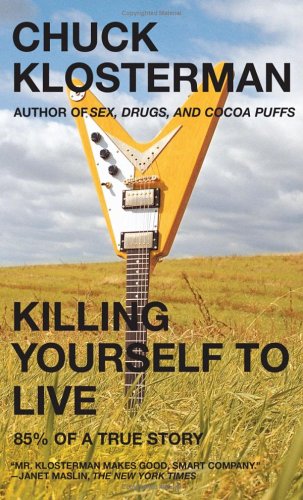
III Killing Yourself to Live by Chuck Klosterman

I grew up going to a lot of funerals, and with hyper-religious family members coupled with anti-religious family members, I have thought about death a lot, and somehow this book (Klosterman’s best), captures images that link subtly together his three plots: one, being on a trip to the locations of famous rock stars deaths; two, his struggle to figure out what exactly he’s doing with the three major women in his life (which he captures about half-way through with a very Alanis-esque device that works on so many levels); and three, what it means to die as a rock star in America, where supposedly the best thing you can do is die young and leave a good-lookin corpse.


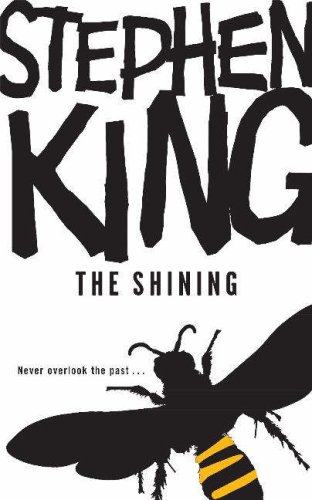
IV The Shining By SK

Mentioned before, this used to be my favorite SK book, but Misery won out somewhere. I think it was the anger. The Shining is a very angry book (SK calls it arrogant, but I think that’s less of a problem) and though it has some very good parts and is still top two/three of SK books in my mind--there are a couple problems I have with this book as a writer--the first and most obvious is the deus ex machina at the end that comes out of nowhere and the second is the magical black man who comes and saves the day at the end, not to mention the heavy-handed “I’m an alcoholic--get it?!” stuff that occurs in the book and whenever SK talks about it. It’s a good book, but Jesus Christ, man. I get it.


V The Virgin Suicides by Jeffrey Eugenides

This is another book fascinated with death and the things it does to the living (so is the next one). Neighborhood boys are obsessed with the Lisbon sisters, who’s sister has just committed suicide. The book is somehow dreamy in it’s quality, and that’s what I like the most about it--the style. Everything from the most horrifying event to the subtlest gestures from Lux are told with a matter-of-fact quality that makes it sound as if someone is recounting a dream after waking.


VI Pet Semetary by SK

This is the most hurtful, most depressing, most insane book I have ever read, and it’s not because it’s graphic (it is), and it’s not because it’s scary (it is), but it’s because it is the story of a man who goes batshit insane and every thought till the end seems rational. This isn’t a “how can he do that? That’s so stupid!” book, this book pushes everything you have into the fire and then burns you when you try to grab it back. It’s SK’s scariest book, it’s the only one that he wrote and tucked away for a time because it was too dark, and it the only one that still scares him, the guy who wrote it.


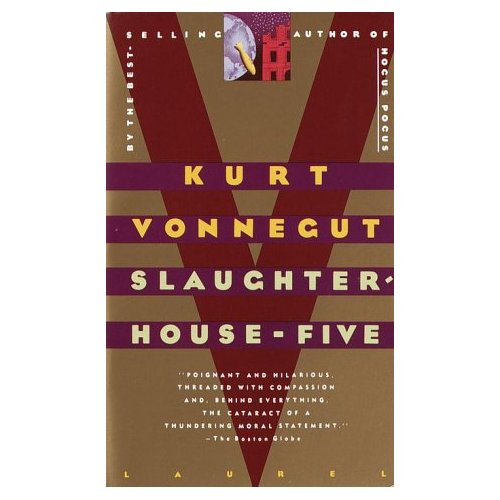
VII Slaughterhouse Five by Kurt Vonnegut

The book everyone knows Vonnegut for, this is a tale, half-autobiographical, that explores reality on all fronts--what we believe, what we want to believe, what we discount, and what we wish for. Billy Pilgrim’s adventures after being unstuck in time carry with them a strange sort of truth hidden throughout--that your life is totally insane and completely hilarious (mostly).
Also: I don't have any idea why I used this picture for the book with all the white on the edges. I'm tired, I think.


VIII An Occurrence on Owl Creek Bridge by Ambrose Bierce

This story is the king of all short stories (I think)--the treat is really the end, where things turn and twist and become suddenly very upsetting, but the whole thing is clear and perfect, truly taking the reader and transporting them to a bridge in 1864, the day of a hanging.


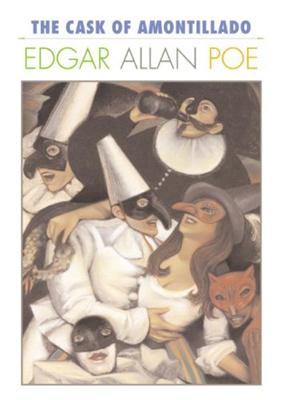
IX The Cask of Amontillado by Edgar Allen Poe

This story I’ve read hundreds of times simply because it is dark, mean and completely unjustified. It’s a quick read, and describes in perfect detail a man who has come to grips with exacting his revenge in the most ingenious way possible, and the methodical nature of the entire thing makes you smile the knowing, cruel smile of a cat with a wounded bird in it’s teeth.


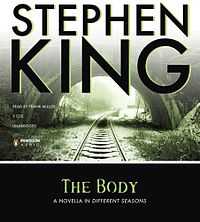
X The Body by SK

This is the last one, and the last one is SK. That’s sort of annoying--I wanted to jam up my most read, not be an SK essayist. But these are the books and stories I’ve read most, and The Body is probably the story I most identified with growing up--sad, lonely, low self esteem--these things were very present in my life when I was young--as well as the fun, adventure and anger that also welled up inside of me and in the pages. I no longer wish I had been one of those boys in the carefree world of Castle Rock in 1960 walking up the tracks, but I do wish that I could someday channel so much of myself into a book that could mean something to someone else as much as this book meant to me. This was the book that made me feel like I was a writer and that maybe I wasn’t alone in my desire to put down on paper the things in my head. SK came out of the pages, talked to me, and made me believe that I could be whatever I wanted.

Note about Spoiler Warnings: If you don’t want to know about the plot/elements of a story, don’t read the article/paragraph or whatever. I think that that is the most simple, self-explanatory thing a person can do when reading any kind of review. Expect spoilers from ANYTHING you read about something you haven’t experienced. Spoiler warnings are crocks of shit. Also, none of these books were beyond you to read yourself--none of them came out this year so if you are planning on reading one of these books (no, you weren’t), then don’t read the reviews. Otherwise, don’t complain about it.

Stumble Upon Toolbar

Thursday, June 10, 2010

How I Learned to Like Blade Runner

Forgive me, I'm a total movie person, so I'm about to geek out pretty heavily on the subject of Blade Runner.

I'm sure no one has ever talked about it before

So I was reading something by Philip K. Dick (This, actually) and suddenly, on a whim, decided to watch this "Science-fiction masterpiece" again. Now I already had very specific ideas and opinions about this movie, mainly about how much I hated it. It was slow, it was talky, it pretended to be Noir, but really wasn't, it pretended to be a mystery, but was really just a stupid action movie. Not to mention whenever anyone talks about it, all they can do is say how groundbreaking the special effects are. Not the plot, not the acting, not the ambition of ideas, not the reinvention of science-fiction priorities, just the special effects. 5 years after George Lucas dropped the weak-assed-plot-wrapped-in-eye-candy Star Wars, all people could talk about was how pretty the lights looked on the screen. But that's the whole thing. After watching Blade Runner again, I realized that the visuals (even by Star Wars standards) are okay, but the true merit of the film lies somewhere in the real meaning behind the movie, and not the movie itself.

For those unfamiliar who might still be reading, I have to spoil a part of the film to really talk about what I find interesting. The film involves androids who are true mock-ups of humans and only differ from us in that they cannot feel emotions. However, since the computers are so advanced, there is a theory that they can develop emotions naturally, and the androids in the film truly do. A set of four escape from a mining planet and sneak back to Earth (where they are illegal), and set out killing those who work in the company that actually built them.

Perhaps you're wondering why they're killing their makers, and I'm pretty sure I wondered this every time I watched it. Why would you want to kill your creator? What did he ever do but give you life, the ability to experience everything you do, every flower you smell, every steak you taste, every moment you ever live through can be sort of traced back to your creators responsibility (other than yourself, really [this isn't necessarily true with humans, but as an android, it is more so]. So why the hell would Roy Batty want to take on his creator?

Seems like a perfectly rational guy to me

Well, you see, Replicants (their name for the androids [assuming because the word Droid is Copyrighted by Lusafilms LTD. Really, go look at an add for the new Verizon smart phones and read the tiny print) can only live for four years. So he does what anyone would do when they find out they have a limited existence: he flips the fuck out. He tracks down his creators, kills them one by one, and then finds his "father"--the president of the Tyrell company--and drives his thumbs into his eyes while simultaneously crushing his skull, after it is revealed that he only has 4 years--no more.

Perhaps this seems a bit reactionary--after all Tyrell did nothing but create robots and make a slaying in the profit margins (to the point where he has God-like control and monopoly over the creation of fake people). But that's the catch, isn't it? Because Tyrell didn't create fake life--he created a consciousness that might one day learn emotions and can handle complex problems and fake a human life pretty easily. So in effect, Tyrell created non-biological life. But as an adult, shouldn't Roy Batty go through the normal 5-step process that most adults go through when confronted with grief? Well, no, after all, he's only 4. He is more intelligent, sure, than a 4 year old, but he hasn't reached an emotional capacity beyond anger, as revealed to us when he kills everyone he comes in contact with. Not only this, but he was built logically, his consciousness was built upon ones and zeros--the ultimate logical plane. So now that emotions have been developed after time, it throws those ones and zeros out the windows, or at the very least scrambles them quite a bit. So his only natural response is to kill and destroy.

[Stephen King Moment] Also, In Pet Semetary, Ellie, the oldest daughter, reacts pretty angrily when she finds her pet cat Church has died (based on a real reaction of SK's daughter when her own cat died) throws a bit of a temper tantrum (I think SKs daughter smashed some stuff in the garage), screaming "Church was my cat, let God get His own cat!" Showing even little girls don't react very well when the tenents of mortality leap up and smack us in the face. [/Stephen King Moment]

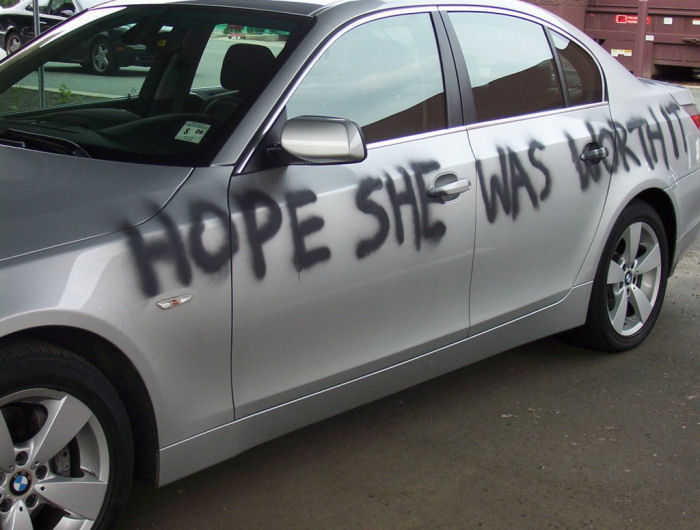
But what does that say about us? If you went to God tomorrow and said, "Look man, this Heaven place seems fine and dandy, but I'd really like a couple more years down there--I've got some shit to take care of. After all, I never made it to Ireland, I never found a woman to share my life with, I never got to see a live football game, etc," and he said "Sorry, Mate, but I've got bigger shrimp on the barbie than you," (for some reason God is Paul Hogan of Crocodile Dundee II fame in my fantasies), I'm pretty sure I'd be pissed. Maybe not drive-my-thumbs-into-your-eye-sockets-while-simultaneously-crushing-your-skull pissed, but maybe spray-paint-your-car-like-a-wife-with-an-adulterous-husband pissed.

Probably not, that's going to cost at least $350.

I guess the only real difference is that Tyrell, in his god-status to the replicants can't give everlasting life (or hell, a new battery) to Roy Batty, the story with us and God is...well, what exactly? That he won't? That we won't need it? That maybe he can't? The ambiguousness is the real lesson, as it usually is when Science Fiction takes on religion.

Anyway, these aren't my concerns (I'm cool with my beliefs as they are and aren't), but these are the concerns of the film, and somehow on this last viewing, I finally saw it. Wikipedia says this movie is multi-faceted, and I can buy that, but usually there are movies out there that mean nothing to me upon frequent viewings and then suddenly POW I get it like a lightning strike through my head, and I get the way I can think about the movie in a new way that makes it interesting whereas before it was shitty. Now if I could only do that with The Departed, I can die happy.

Stumble Upon Toolbar

Wednesday, March 3, 2010

Wreckless Musings [ii]

Written in phone whilst incredibly drunk:

There's a reason I came here. The reason is that i never do. I'm a pussy. I never hang thick with strangers. I never follow the[m] home and drink their booze and pretend i find their conversations compelling. I never do this. That's why I'm here. It's necessary. It's necessary to discover the person I always thought I was, the loose cannon, the weird stranger that sleeps on the travelers couch. I wanted to make no sense. and here I am. Living the dream.

Stumble Upon Toolbar

Monday, January 11, 2010

Calvin, McCandless, and Me

I've decided I'm going to walk the Appalachian Trail, and I'm pretty sure I want to do it in the next five years, otherwise I'll be older and smarter and full of the angst of unfulfilled dreams. Like most of the people I know.

It's really just because I love nature, and love being in nature, and pretty much sweat the whole thing. No, I'm not the guy that explores Central Park or the rest stop on the Interstate, I need to be surrounded by woods, and so far I've done decent jobs of it. Some in Alaska, a lot in the Pine Barrens of New Jersey, some in Vermont (Green Mountain Range) and some in New York State (though not as much as I'd like). I've been around, but the Appalachian Trail is really what I want to do. I'm not sure when this fascination for nature came about, but I'm pretty sure it had to do with Calvin and Hobbes.

Probably the most famous of the comics from the eighties to the early nineties or whenever, Calvin and Hobbes was a mainstay in The Press of Atlantic City, my local paper when I was younger. Every Sunday (we only got the Sunday paper) I'd zoom outside and grab the paper, my feet clad in white socks with black bottoms from the wet driveway. On the way back inside I would shell the front page and sports section like a hard-boiled egg and run back into my room, to look at the only colored pages that mattered to me.

This was back before Nancy got reverted (badly) back to it's 1933 roots and when Charles Schultz was still churning out funny stuff from time time, before the Parkinson's got so bad none of the characters had straight lines. Beetle Baily still got stomped by the Sarge and Bloom County was still around (though hardly something I understood). I still read Family Circus, hoping for a funny joke here and there (although I think I mainly read them when Billy went on his adventures and a segmented line indicated his path).

But Calvin and Hobbes was the first one I read, every time, even when we started getting the real paper during the week (or at least Mondays, Thursdays and Fridays). It was the drawing that really got to me. Bill Watterson could really get trees down. I've always liked to doodle and draw myself, though I don't think I'd win any contests since mainly what I liked drawing was stuff I'd never seen before: Mountains. I liked drawing trees on cliff sides overlooking long, flat valleys and caves built into low foothills under the Rockies or perhaps an idle tower of rock poking up like a black tooth from a desert landscape in a lonely corner of Nevada (or Utah, or Arizona. Like I said, I'd never really seen any of those things, and the internet wasn't around).
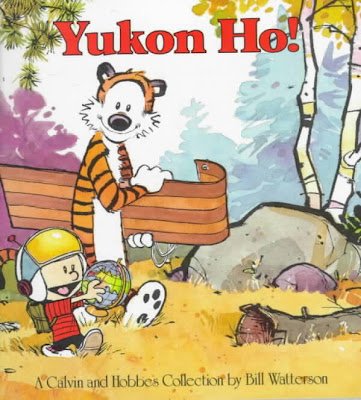


What struck me about Bill Watterson was that he could draw those things, did draw those things, and the best part was that he captured them the way my mind saw them: as funny shapes against a stark background, or a wealth of color on a blank canvas. Calvin and Hobbes (even with the limited colors at first) spoke of an imaginary world that mimicked our own so well that no one would ever be able to tell the difference. It wasn't Utah, it was Calvin's backyard, it wasn't the foothills of Appalachia, it was the long, endless forest behind Calvin's house that he'd go traversing through, his best friend at his side, in search of hills to ride his wagon down, hidden flags for Calvinball, and cool rocks to carry back home and put on his windowsill.

I wanted Calvin's backyard, I wanted the otherworldly feeling I got from those comics, and to be perfectly honest, I still do. I've been camping many times, I've lived without electricity and powered lighting and cell phones and television, without the help of the internet, books, or even a tent. For me it was always about communing with nature, always about being free from the things that other people could not see living without. They were my Calvin trips. Sometimes I was alone (though I was surrounded by people), sometimes with my friends, but always with nature and the world. It felt good to cast all the woes and worries of civilization away with the phone in my car, left to wander for a day or so, or to leave all those things at home and go camp out for a week with little to no amenities from society.

But Appalachian Trail, man. That's where it's at, really. That's the Holy Grail for me. For some it's Alaska, like Christopher McCandless. McCandless was a kid from the East Coast who (like me) resented modern society and most of the bullshit stresses and warrantless misunderstandings of human nature. He (unlike me) however, decided to ditch the money he had, hop into his Datsun, and bail. He lived for two years on the road, never staying in one place for very long, never stopping to think too long and hard about anything. When he was tired he slept, when he felt like moving on, he did, and he let nothing tie him down (including his car after a flash flood had killed the battery). He lived month after month as a vagrant, a hobo, living off the land and needing nothing.


However, McCandless was also a little too loose, not unlike Calvin when he decided to run away to the Yukon. McCandless's dream, his Holy Grail, was Alaska. He decided to get up there, probably for one last big adventure, but unfortunately he had been reading a lot of Tolstoy and Thoreau, and not a lot of survival magazines or books concerning the biggest frontier in the United States. Five months after being dropped off with little more than a couple of tuna fish sandwiches and ten pounds of rice on the Stampede Trail just East of Denali State Park, Christopher McCandless was found dead in an abandoned bus, literally walking distance from food or help, starved to death (although some think it may have been due to poison from eating moldy seeds). He made two errors in his great journey: no map, no research. There was a line of cabins near the site where he died, but he had never found them because he thought he was in the middle of nowhere, and his return up the trail was stopped because the summer run-off from the mountains nearby had blocked his way out. If he'd had a map, he'd have found those cabins, if he had done some research (or hadn't stuck to the desert for most of his other travels), he would have realized that tiny streams in April can become untraversible rivers when the snow melts. Even Calvin read a map (though he thought the Yukon was literally inches away, because he had no idea how to read one. I mean, he's six.)

I'm not mocking McCandless, though. I totally understand where he was coming from, and agree with him on almost all points. Living on the grid does suck, it's a nuisance and worrisome and a pain in the ass. I'd love to go off and live like Calvin in the woods, alone or otherwise, finding and expereincing the beauty in the world all around us. However, though I want to, I probably won't. I like writing, I'd like to get a book out some day. I'd like to have a wife and kids and all that shit that McCandless didn't want or understand (and that Calvin didn't want to understand). I'll probably do the Appalachian Trail, or at least enough of it to make me feel accomplished, and I'll come back to the world and pay my taxes like a good automaton. Does this make me a sell-out, a grevious wretch who's going back on his ideals, cashing in on those things that make me lazy, weak, and misunderstood? Maybe. But I know that when I come back from the Trail and see my family and go back to work or whatever that I did something I had always wanted to do, gone somewhere I'd always wanted to go, and that I had accomplished something worth doing.

I think Calvin would understand.

References:
"Christopher McCandless -." Wikipedia. Web. 11 Jan. 2010. http://en.wikipedia.org/wiki/Christopher_McCandless.
"Calvin and Hobbes -." Wikipedia. Web. 11 Jan. 2010. http://en.wikipedia.org/wiki/Calvin_and_hobbes.
Krakauer, Jon. Into the Wild (MTI). New York: Anchor, 2007. Print.
.

Stumble Upon Toolbar