Showing posts with label Stephen King. Show all posts

Tuesday, April 12, 2011

Shelter Books

I am a re-reader. I’m not ashamed to admit it, I’ve come to accept that I’m the kind of person who digs a little bit of the same-old, same-old sometimes. Though I can’t say I re-read everything (as there are definitely books and essays I’ve read that were terrible the first time) I do consider myself a person who re-reads.
There are also some books that I’ve read that were so great, but so HUGE that I could never re-read them simply because the first time was such an undertaking. The Stand for example: that book is so long that it actually exhausts me after the first act (what I like to think of as the “Everybody dies” Act). It’s hugeness is daunted only by Infinite Jest by David Foster Wallace--Which I have been reading in a picking-it-up-putting-it-down way for the last two years. That book (Infinite Jest) is a mind crusher (it’s 1079 pages, with endnotes).


There are other books that I don’t/can’t/won’t reread simply because they were so heavy in subject. I may re-read them again someday, but not soon--it’s too much for my blood. For example: Middlesex, by Jeffrey Eugenides (read in 2008) was an amazing book that pretty much retaught me what a book could do and what a book could be if enough effort, time, and talent were put behind it. It’s not the longest book, but holy shit does it cast a numerous bunch of characters that change, evolve, bulb off and spread anew into an ever-changing landscape of America. That’s a lot of words to say that Middlesex sorta-kinda rocked my face off, and though I’d love to go through it again, it wouldn’t do me any good to re-read it once a year--it just wouldn’t be the same. Same with For Whom the Bell Tolls--that book is crazy-good, but once. At least for now.
However, all this said, I do re-read books. Usually when I mention this to my friends they are in one or two camps: they don’t read that much (if at all), so they’ve only read the same one book twice or the same three books over and over again for however long they’ve owned them. I find that to be boring--why reread the same three books and never experience new books? But the other camp--all they do is read NEW books--like all they crave is new information, and never see the point in looking back on something to see what the hell it was that made it so interesting.
So the thing is this: I consider those books I’ve re-read a bunch of times (like over 4) “Shelter books,” i.e. books that I read when the storms are rough and I forgot what it was that made me who I am as a reader--what I like, what I hate, what defines my beliefs as a human--these books are the ones I’ve re-read for years. So these are them--some classics, some not-so-classics, most you’ve heard of (hopefully), and heavy Stephen King (it was the only dude I read for the first ten years of my reading-life), but at least they do something for me I can’t quite exactly put a finger on anymore except they make me feel at home.
(PS: These books are listed as they a)popped up in my brain and b) how many times I’ve read them)

I Lord of the Flies By William Golding

This is the best book ever written. Easily. Sure, I didn’t read Atlas Shrugged or whatever that other book is with the people or whatever--this book is truly the bees knees. If you don’t know the plot (bunch of boys stranded on an island trying, at first, not to kill each other), then don’t read the sentence I just typed, as it may contain spoilers. The subtle parts, the explicit parts, the anger, the sorrow, this book has everything (except a love story, but hey, we’re talking allegories here, people). If you haven’t read this book, go somewhere right now and buy it and read it. No one can hold a candle to this book. Sorry. Best book there is. By far.


II Misery by Stephen King (SK)

This replaced The Shining as my most read and most beloved SK book about four years ago, I think. I’m pretty sure, also that, like Lord of the Flies, I read this sucker every other year or so. It’s not just that it’s about a writer (most SK books are), but it’s about a writer who’s trapped in who he is, who notices him and his work, and therefore how he thinks about himself. Not to mention he's ACTUALLY trapped by a crazy woman who has an interesting set of ethics and sense of...justice? Don’t watch the movie--it’s not the same. Caan is amazing in the film, but captures a fraction of the torment a writer feels when he can’t escape his own name.
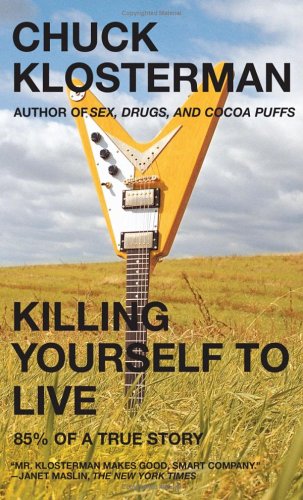


III Killing Yourself to Live by Chuck Klosterman

I grew up going to a lot of funerals, and with hyper-religious family members coupled with anti-religious family members, I have thought about death a lot, and somehow this book (Klosterman’s best), captures images that link subtly together his three plots: one, being on a trip to the locations of famous rock stars deaths; two, his struggle to figure out what exactly he’s doing with the three major women in his life (which he captures about half-way through with a very Alanis-esque device that works on so many levels); and three, what it means to die as a rock star in America, where supposedly the best thing you can do is die young and leave a good-lookin corpse.
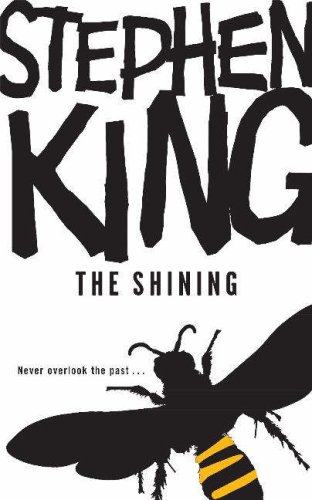


IV The Shining By SK

Mentioned before, this used to be my favorite SK book, but Misery won out somewhere. I think it was the anger. The Shining is a very angry book (SK calls it arrogant, but I think that’s less of a problem) and though it has some very good parts and is still top two/three of SK books in my mind--there are a couple problems I have with this book as a writer--the first and most obvious is the deus ex machina at the end that comes out of nowhere and the second is the magical black man who comes and saves the day at the end, not to mention the heavy-handed “I’m an alcoholic--get it?!” stuff that occurs in the book and whenever SK talks about it. It’s a good book, but Jesus Christ, man. I get it.


V The Virgin Suicides by Jeffrey Eugenides

This is another book fascinated with death and the things it does to the living (so is the next one). Neighborhood boys are obsessed with the Lisbon sisters, who’s sister has just committed suicide. The book is somehow dreamy in it’s quality, and that’s what I like the most about it--the style. Everything from the most horrifying event to the subtlest gestures from Lux are told with a matter-of-fact quality that makes it sound as if someone is recounting a dream after waking.


VI Pet Semetary by SK

This is the most hurtful, most depressing, most insane book I have ever read, and it’s not because it’s graphic (it is), and it’s not because it’s scary (it is), but it’s because it is the story of a man who goes batshit insane and every thought till the end seems rational. This isn’t a “how can he do that? That’s so stupid!” book, this book pushes everything you have into the fire and then burns you when you try to grab it back. It’s SK’s scariest book, it’s the only one that he wrote and tucked away for a time because it was too dark, and it the only one that still scares him, the guy who wrote it.
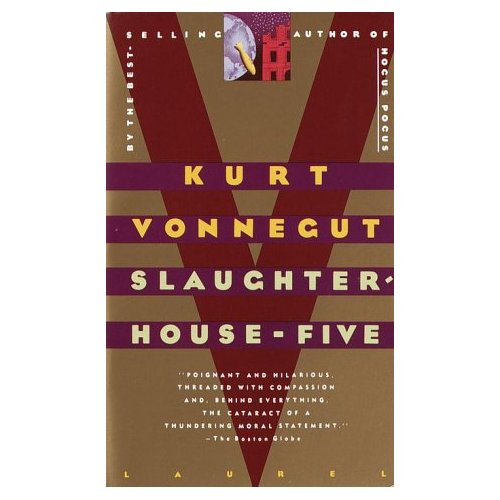


VII Slaughterhouse Five by Kurt Vonnegut

The book everyone knows Vonnegut for, this is a tale, half-autobiographical, that explores reality on all fronts--what we believe, what we want to believe, what we discount, and what we wish for. Billy Pilgrim’s adventures after being unstuck in time carry with them a strange sort of truth hidden throughout--that your life is totally insane and completely hilarious (mostly).
Also: I don't have any idea why I used this picture for the book with all the white on the edges. I'm tired, I think.


VIII An Occurrence on Owl Creek Bridge by Ambrose Bierce

This story is the king of all short stories (I think)--the treat is really the end, where things turn and twist and become suddenly very upsetting, but the whole thing is clear and perfect, truly taking the reader and transporting them to a bridge in 1864, the day of a hanging.
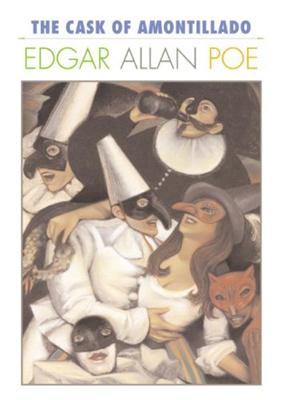


IX The Cask of Amontillado by Edgar Allen Poe

This story I’ve read hundreds of times simply because it is dark, mean and completely unjustified. It’s a quick read, and describes in perfect detail a man who has come to grips with exacting his revenge in the most ingenious way possible, and the methodical nature of the entire thing makes you smile the knowing, cruel smile of a cat with a wounded bird in it’s teeth.
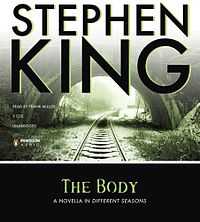


X The Body by SK

This is the last one, and the last one is SK. That’s sort of annoying--I wanted to jam up my most read, not be an SK essayist. But these are the books and stories I’ve read most, and The Body is probably the story I most identified with growing up--sad, lonely, low self esteem--these things were very present in my life when I was young--as well as the fun, adventure and anger that also welled up inside of me and in the pages. I no longer wish I had been one of those boys in the carefree world of Castle Rock in 1960 walking up the tracks, but I do wish that I could someday channel so much of myself into a book that could mean something to someone else as much as this book meant to me. This was the book that made me feel like I was a writer and that maybe I wasn’t alone in my desire to put down on paper the things in my head. SK came out of the pages, talked to me, and made me believe that I could be whatever I wanted.

Note about Spoiler Warnings: If you don’t want to know about the plot/elements of a story, don’t read the article/paragraph or whatever. I think that that is the most simple, self-explanatory thing a person can do when reading any kind of review. Expect spoilers from ANYTHING you read about something you haven’t experienced. Spoiler warnings are crocks of shit. Also, none of these books were beyond you to read yourself--none of them came out this year so if you are planning on reading one of these books (no, you weren’t), then don’t read the reviews. Otherwise, don’t complain about it.

Stumble Upon Toolbar

Thursday, June 10, 2010

How I Learned to Like Blade Runner

Forgive me, I'm a total movie person, so I'm about to geek out pretty heavily on the subject of Blade Runner.

I'm sure no one has ever talked about it before

So I was reading something by Philip K. Dick (This, actually) and suddenly, on a whim, decided to watch this "Science-fiction masterpiece" again. Now I already had very specific ideas and opinions about this movie, mainly about how much I hated it. It was slow, it was talky, it pretended to be Noir, but really wasn't, it pretended to be a mystery, but was really just a stupid action movie. Not to mention whenever anyone talks about it, all they can do is say how groundbreaking the special effects are. Not the plot, not the acting, not the ambition of ideas, not the reinvention of science-fiction priorities, just the special effects. 5 years after George Lucas dropped the weak-assed-plot-wrapped-in-eye-candy Star Wars, all people could talk about was how pretty the lights looked on the screen. But that's the whole thing. After watching Blade Runner again, I realized that the visuals (even by Star Wars standards) are okay, but the true merit of the film lies somewhere in the real meaning behind the movie, and not the movie itself.

For those unfamiliar who might still be reading, I have to spoil a part of the film to really talk about what I find interesting. The film involves androids who are true mock-ups of humans and only differ from us in that they cannot feel emotions. However, since the computers are so advanced, there is a theory that they can develop emotions naturally, and the androids in the film truly do. A set of four escape from a mining planet and sneak back to Earth (where they are illegal), and set out killing those who work in the company that actually built them.

Perhaps you're wondering why they're killing their makers, and I'm pretty sure I wondered this every time I watched it. Why would you want to kill your creator? What did he ever do but give you life, the ability to experience everything you do, every flower you smell, every steak you taste, every moment you ever live through can be sort of traced back to your creators responsibility (other than yourself, really [this isn't necessarily true with humans, but as an android, it is more so]. So why the hell would Roy Batty want to take on his creator?

Seems like a perfectly rational guy to me

Well, you see, Replicants (their name for the androids [assuming because the word Droid is Copyrighted by Lusafilms LTD. Really, go look at an add for the new Verizon smart phones and read the tiny print) can only live for four years. So he does what anyone would do when they find out they have a limited existence: he flips the fuck out. He tracks down his creators, kills them one by one, and then finds his "father"--the president of the Tyrell company--and drives his thumbs into his eyes while simultaneously crushing his skull, after it is revealed that he only has 4 years--no more.

Perhaps this seems a bit reactionary--after all Tyrell did nothing but create robots and make a slaying in the profit margins (to the point where he has God-like control and monopoly over the creation of fake people). But that's the catch, isn't it? Because Tyrell didn't create fake life--he created a consciousness that might one day learn emotions and can handle complex problems and fake a human life pretty easily. So in effect, Tyrell created non-biological life. But as an adult, shouldn't Roy Batty go through the normal 5-step process that most adults go through when confronted with grief? Well, no, after all, he's only 4. He is more intelligent, sure, than a 4 year old, but he hasn't reached an emotional capacity beyond anger, as revealed to us when he kills everyone he comes in contact with. Not only this, but he was built logically, his consciousness was built upon ones and zeros--the ultimate logical plane. So now that emotions have been developed after time, it throws those ones and zeros out the windows, or at the very least scrambles them quite a bit. So his only natural response is to kill and destroy.

[Stephen King Moment] Also, In Pet Semetary, Ellie, the oldest daughter, reacts pretty angrily when she finds her pet cat Church has died (based on a real reaction of SK's daughter when her own cat died) throws a bit of a temper tantrum (I think SKs daughter smashed some stuff in the garage), screaming "Church was my cat, let God get His own cat!" Showing even little girls don't react very well when the tenents of mortality leap up and smack us in the face. [/Stephen King Moment]

But what does that say about us? If you went to God tomorrow and said, "Look man, this Heaven place seems fine and dandy, but I'd really like a couple more years down there--I've got some shit to take care of. After all, I never made it to Ireland, I never found a woman to share my life with, I never got to see a live football game, etc," and he said "Sorry, Mate, but I've got bigger shrimp on the barbie than you," (for some reason God is Paul Hogan of Crocodile Dundee II fame in my fantasies), I'm pretty sure I'd be pissed. Maybe not drive-my-thumbs-into-your-eye-sockets-while-simultaneously-crushing-your-skull pissed, but maybe spray-paint-your-car-like-a-wife-with-an-adulterous-husband pissed.

Probably not, that's going to cost at least $350.

I guess the only real difference is that Tyrell, in his god-status to the replicants can't give everlasting life (or hell, a new battery) to Roy Batty, the story with us and God is...well, what exactly? That he won't? That we won't need it? That maybe he can't? The ambiguousness is the real lesson, as it usually is when Science Fiction takes on religion.

Anyway, these aren't my concerns (I'm cool with my beliefs as they are and aren't), but these are the concerns of the film, and somehow on this last viewing, I finally saw it. Wikipedia says this movie is multi-faceted, and I can buy that, but usually there are movies out there that mean nothing to me upon frequent viewings and then suddenly POW I get it like a lightning strike through my head, and I get the way I can think about the movie in a new way that makes it interesting whereas before it was shitty. Now if I could only do that with The Departed, I can die happy.

Stumble Upon Toolbar

Monday, November 16, 2009

What To Do, what to do

I am different from everyone.

I know everybody is different from everybody else and that somehow we are all the same decomposing material and noxious waste. I know how we're all human and alike, but really unique in our own special way, and all we have to do is find our niche.

However, I am slowly coming to the idea that I have no niche, I have no specificity, I am not obsessed over anything, and this just may be my downfall. Especially if I want to be a writer.

Let me explain. I love music. Music is great. Music is something that can get inside your brain and twist it into bows or knots, fold it into an oragami swan or crumple it into a wet ball and toss it in the wastebasket. Music is the one thing that I'd have to say 90% of the world at least can handle on some kind of level. Some people love punk rock, blues, metal, emo, hip-hop, r&b (do they even call it that anymore?), soul, "classic" rock, 80's hair metal, pop, grunge, country, bluegrass, &cetera &cetera &cetera I could go on for fucking days. Some people like one kind of music and THAT'S IT. SOme people have a mixed bag. But me (and a lot of people I know) like ALL KINDS OF MUSIC. And that's where I sit. Somewhere on the gray line between all genres. I like almost everything. Our mixed bags are bigger than most (like those who just like blues, jazz, and swing and big band and...oh sorry), but that doesn't make us any better than those who like trance, house, techno and industrial. We're just different, and I get that.

But here's my problem: can I write about just music? Fuck no. I see what that does to people. Before you know it, I'll hate music. I'll hate the morons who don't listen to the music I've had on heavy rotation the last four months. I'll start looking down my nose at musicians who didn't affect me with their songs when I can't even play a fucking instrument (no hand-eye coordination, and I'm REALLY fucking lazy) .Look at Rollingstone's David Fricke. That guy fucking sucks. There are people out there (me included) who don't believe he EVEN LISTENS TO THE MUSIC HE REVIEWS. I mean, the guy rates an album like Nevermind three stars when it comes out and then retro marks it with five ten years later because he's afraid to look like he didn't know what he was talking about. Of course anyone worth his salt isn't going to Rollingstone's Music-Industry-Spoonfed-Music-"Reviews" anyway, but that 's beside the point. That can't be me. I can't be that egotistical (he said, writing an article about how different he was from everyone). I can't take a job that demands I focus and analyze music as if it was a frog on a rubber plate, it'll kill the whole reason I listen to music: to get away from analysis and get to where I feel good again.

Not only that but I don't know enough. I don't know when Nevermind was released unless I look it up. I don't know how many albums Tool has, I don't know how many bands Jack White is in (3?4?). I don't know my stuff. I can't convince you I know what I'm talking about unless I have that knowledge, and I'm certainly not going to fake it, because then I'm a fraud and have no value whatsoever.

Same thing with movies. I can't review movies, because I have little to no interest in telling people about a movie before they go see it. A preview is enough, but personally I think I'd be a much better person if I didn't even watch them before I walk into a movie. Previews ruin things, they ruin the magic before the movie--they build expectation (which can lead to disappointment) and kill the idea of honest intake. How many times have you watched a preview or read a review that a) gave away key plot points that would have been better left out or b) looked so stupid that you would never see it in a million years or c) got you chomping at the bits to go see that movie only to have you walk out of the theater twenty minutes into the film?

There's no way to solve this, really. Without promotion you can't have movies but that's why I can't review movies: I don't want to give away major plot points and I certainly don't want to take four thousand words and trash something I found no value in that you might really like. Everyone is different. Transformers 2 did really well at the box office, but the movie had no artistic or asthetic value. Yet it made billions (and I saw it in the theater, don't ask). But the key problme I have in reviewing movies is the same as music: I don't know my stuff. I like movies, but that doesn't give me the right to talk about them in anything but vague, compromised terms. I can talk about the thematic elements of The Dark Knight, but the only people who want to read that are decent film teachers and friends who don't mind listening to me ramble at length about morality plays when they really need to take a shit. I can't write a forty-thousand word review and submit that shit to the Times.

Many authors try to stick to one genre of writing: something that they're really good at or know a lot about; Stephen King is versatile, but he watched a ton of movies when he was a kid, mostly the badly made sci-fi/horror flicks made in the fifties and sixties. Dude obsessed over those, hitchhiking back and forth from a neigboring town to watch film versions of penny-dreadfuls. Crichton was a medical student obsessed with technology and the weird relationships of it's advancement and nature and how humans and technology really mean terrible things for each other. John Grisham worked in a law firm and knows his shit when it comes to law. He loves it, and he loves to show the morality between the decisions people make and the law that represents them. He's a beast. Clancy does military stories, Anne Rice does Vampires, Mark Twain did rural South in the 1800's, Fitzgerald did the rich youth of the twenties (well, the white ones anyway), and Steinbeck did the Depression-Era common man. These people all know their stuff and so their art drove them in that direction, they wrote what they knew and they knew what it was about their lives that was interesting.

My thing is, I don't know what I'm into. I know a lot of trivial information about books and movies and music. I don't have a career to use for material. Plus what I do know is boring: I know how to paint a garage and play video games and put off writing a paper. I know how to eat too much and play too hard and how to roll my ankle on a porch step and limp for a week. But is that enough to try and write and sell stories on? Is what I have that churns in me enough to live on so I don't have to worry about stupid shit anymore (something I know too much about)?

I guess I'll just have to do what I can with what I have and hope for the best. I suppose it's something I'll have to learn to do, just like everything else.

Stumble Upon Toolbar

Wednesday, July 22, 2009

Stephen King's New Novel isn't very novel

What the fuck happened to Stephen King?
His latest “horror” novel will be called Under the Dome. Here’s the description:

On an entirely normal, beautiful fall day in Chester’s Mill, Maine, the town is inexplicably and suddenly sealed off from the rest of the world by an invisible force field. Planes crash into it and fall from the sky in flaming wreckage, a gardener’s hand is severed as “the dome” comes down on it, people running errands in the neighboring town are divided from their families, and cars explode on impact. No one can fathom what this barrier is, where it came from, and when—or if—it will go away.
Dale Barbara, Iraq vet and now a short-order cook, finds himself teamed with a few intrepid citizens—town newspaper owner Julia Shumway, a physician’s assistant at the hospital, a select-woman, and three brave kids. Against them stands Big Jim Rennie, a politician who will stop at nothing—even murder—to hold the reins of power, and his son, who is keeping a horrible secret in a dark pantry. But their main adversary is the Dome itself. Because time isn’t just short. It’s running out.
--www.stephenking.com


Huh. Where did I see that done before?
Oh yeah. The fucking Simpsons Movie. Didn’t the entire town of Springfield get trapped under a dome after Homer dumped pig shit into the lake? Didn’t the town fall to lawlessness and violence? Wasn’t it because of a sick and twisted politician? Didn’t it eventually come down to Homer and Bart saving the day?

You’re probably not as hurt as I am by this weird sort of hollywood-esque lifting of an idea, but Stephen King was a huge part of my life and to watch him blatantly take another old, tired, hackneyed idea and somehow churn a bestseller out of it (and probably take home an award for it) is a sad day indeed.

You see, I’ve been a King fan for nearly as long as I could read. I can’t remember the first story I read by him, but I do remember my dad reading stories from Night Shift to me when I was young and impressionable. Sometime later I began reading everything I could that had the man’s name on it, gobbling up one after another, raiding the library for everything they had (not to mention building substantial fines when it took longer than two weeks to finish them). I remember being excited when my family moved because we began going to a different library and I had a different cache of Stephen King books to reap and enjoy.

Not long after that, at least while in grade school, I began writing stories of my own, nothing memorable, but stories nonetheless, ones mainly based on Stephen King’s style and voice. I remember one that hung off of the “moons and goochers” scene in King’s Novella The Body (later made into a great film called Stand By Me directed by Rob Reiner). I was still reading King all the time and had little or no patience for anyone else, especially when I learned one of my mother’s co-workers was a huge King fan. I asked for King books for Christmas and my birthday, and usually used my money to buy new ones or replacements of library books I’d read so I could re-read them. I read and wrote stories over and over again until I reached high school.

Nowadays kids read Harry Potter or the Twilight books but back in my day it was R.L. Stine with his Goosebumps series. I read his these, usually polishing them in a day or so but usually they ended in a disappointing M. Night Shyamalan twist and were formulaic as hell.

But Stephen King’s stories weren’t as simple to crack. Jack Torrance wasn’t just a cookie-cutter bad guy, he was fucking complicated. Annie Wilkes didn’t just lock Paul Sheldon up in her house because she was the bad guy, there was more important things going on. She was a character you could feel, someone who actually taught Sheldon a thing or two about how his readers read his work, and (definitely) how serious they can be about it. Carrie was sympathetic to be sure, but was also so pathetic you could actually see hating her just a little, maybe even just enough to laugh at her at the wrong moment. Louis Creed was always my favorite character from a writer’s seat, and if you’ve never read Pet Semetary, let me tell you, no story ever showed me how even love itself can be a persons largest downfall.

These stories had bad guys who were more than just cookie-cutter shadows on the wall stumbling along behind the protagonist, but instead felt that they were doing right, that they were the good guys. Not even the good guys were always good guys, sometimes they had to kill an entire town just to get where they needed to go.

But somewhere the needle started to stray. The first time I noticed it was Needful Things. It followed into Delores Clairborne, was slightly stayed by Nightmares and Dreamscapes, then reaffirmed with The Green Mile, his second book about prison in the 50’s.

Maybe you know what I’m thinking of. Somehow King’s stories lost something. He no longer has the urgency he had in his writing. When he wrote The Shining, he wrote it because he had to do something, he had to beat back the demons, had to show you where they hide. Now he writes because he’s got nothing better to do between visits from the kids.

The Green Mile
is good, has heart and is meaningful but I think it’s his last really great book mainly because it was a serial and this forced him to write quick and dirty. After that we have what begins what I consider the New School Stephen King, the one who wins awards, the one who writes a lot but doesn’t say as much, the one who is more conscientious of what he wants out of the story and thereby makes it less interesting.

An example, is perhaps in order for those who may hate me at this point. In On Writing, King’s awesome book about the technical (and not-so-technical) parts of the craft, he says that when he was writing The Shining, he believes his drug-addled mind was trying to convey the power of addiction over the family. However, in The Green Mile, he saw in his editing that his miracle inmate paralleled Jesus Christ, so he changed the character’s name to John Coffey, thereby making the it more obvious. By changing the name, King made the story more about the message (John Coffey is like Jesus Christ) than about the story itself (a man with magical powers is imprisoned and changes the lives of his captors). Early King would not have done this, because Early King was about the story, not the message.

Plus, what happened to the horror, man? The last time King honestly frightened me was when Annie Wilkes took care of the kid cop outside of Paul Sheldon’s window. Or maybe when Gard discovered what was in Bobbi’s shed.

The surprises are gone, too. Tell me you didn’t know what was going to happen to Ted in Hearts in Atlantis sixty pages before it happened. Dreamcatcher had a twist worthy of M. Night Shyamalan (but not Stephen King) and The Dark Tower lost it’s luster after King decided to reference Harry Potter (Specifically, Wolves of Calla and it’s Snitch grenades). The only surpirse I got was the one at the end of Bag of Bones, but only because I suddenly had a Goosebumps book in my hands complete with Deus Ex Machina and a rushed ending with no heart.

It’s sad to watch your hero die a weird death, sadly unaware that he has become a joke of himself. Stephen King was once my very favorite person, the person I strove to be, the one who made me want to write. Now I find I can’t even pick up his books for the sad fear of what kind of pandering I’ll be subjecting myself to.

Enjoy Under The Dome, Mister King. I can’t.

Stumble Upon Toolbar